

On 26 March 2026, Peregrion hosted its second AMS Symposium in Leiden, bringing together delegates from pharmaceutical companies, biotech organisations, CROs and consultancies. Through case studies, study design discussions and regulatory updates, a clear consensus emerged: microtracer studies enabled by AMS has matured to an accepted approach within drug development.
Bringing together over 80 attendees from across Europe (Belgium, Germany, Denmark, France, Hungary, Italy, Netherlands, Switzerland, UK) and the USA.
You can find out more about the event and its programme by visiting this link.
A shift in focus since the first edition
The first AMS symposium, held in 2021, centered on feasibility. Could microtracer studies be conducted reliably? When should they be considered? What infrastructure is required?
Four years later, the developments have moved on. This second edition focused on the breadth of applications and the measurable impact of microtracer data on development programs. Several pharmaceutical companies have since invested in in-house AMS equipment. The number of instruments operational within bioanalysis has grown. Microtracer approaches are now referenced in regulatory guidelines. The technique has, by most measures, been accepted as a standard methodology in drug development.
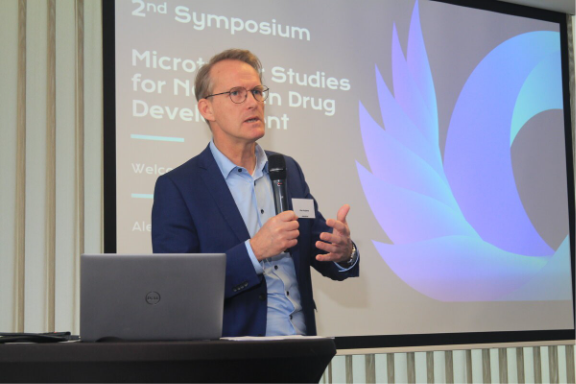
Opening of the 2nd AMS Symposium by Peregrion’s CEO Alex Huybens.
Presentations and key findings
Stefan Blech (Director Bioanalysis, DMPK, Boehringer Ingelheim) presented an approach for establishing microdosing as the default methodology for human ADME studies rather than relying on conventional high-dose designs. He discussed the use of individual AUC metabolite profiles versus pooled sample analysis, and shared a case in which a unique human metabolite was identified in late-stage development that impacted timelines and program decisions. The case study endorsed the relevance of early stage microtracer-enabled hADME studies to prevent late-stage surprises.
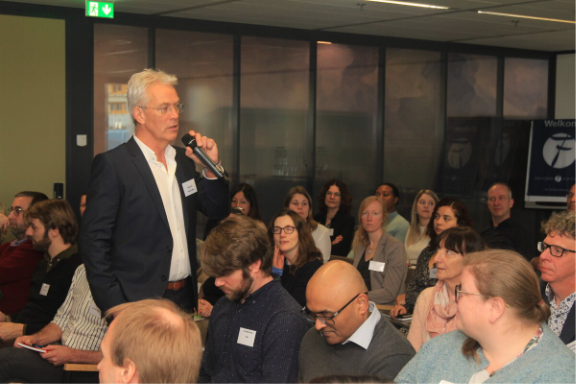
Audience engagement during presentations, here Stefan Blech (Boehringer Ingelheim) is responding to questions from the audience.
Kees Groen (CEO & Co-founder, DGr Pharma) opened the discussion on an important terminology change. What was previously referred to as “non-GMP material” should now be called Qualified Material. A risk-based approach for the use of Qualified Material in 14C microtracer studies has been developed by one of the CROs involved and has been discussed successfully with ethical committees. This approach waives the requirement for GMP manufacturing of radiolabeled material used in microtracer studies, which has direct implications for study cost and planning timelines.
This was one of the most discussed points of the day. For many attendees, the acceptance of Qualified Material represented a meaningful reduction in the operational burden of initiating a microtracer study.
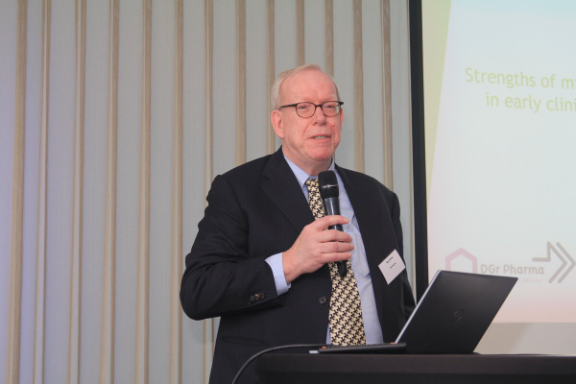
Kees Groen (DGr Pharma) presenting on Qualified Material.
Ronald Kong (VP Clinical Pharmacology & DMPK, PTC Therapeutics) presented data on multiple microtracer dosing. For compounds with accumulation behaviour and long half-lives, a repeat-dose microtracer design proved effective. Slowly formed metabolites could be reliably quantified by AMS after repeat daily dosing, an outcome that is difficult to achieve with single-dose study designs.

Ronald Kong (PTC Therapeutics) presenting the oncology case study.
Holger Scheible (Head of Biotransformation, Merck KGaA) presented a microtracer case study conducted in oncology patients. He emphasised the value of early involvement of a cross-functional human ADME team in clinical development, consisting of subject matter experts in DMPK Biotransformation, Clinical Pharmacology, and CMC.
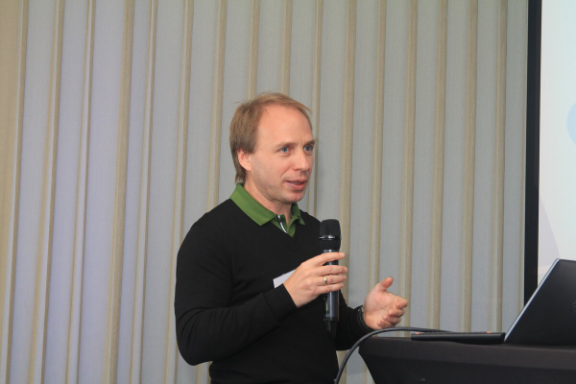
Holger Scheible (Merck KGaA) presenting the oncology case study.
Aram Oganesian (VP Clinical Pharmacology, Taiho Oncology) discussed options for including extended participant groups in human ADME studies, such as participants over 65 years of age. He combined results from LSC, perfusion models, and comp3. The relevance of the GI tract in metabolite assessment and the added value of including an IV arm (to obtain information on the fraction absorbed) in study design was addressed, to gain insight on the added value for organ impairment studies
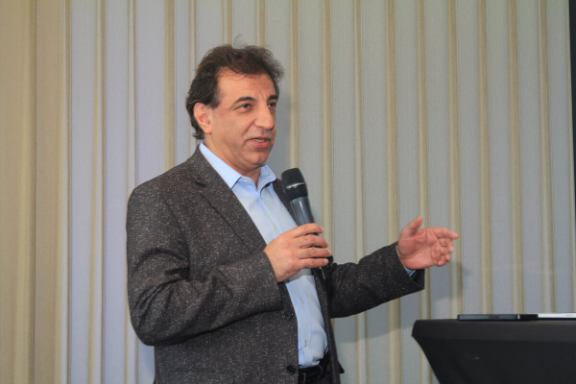
Aram Oganesian (Taiho Oncology) presenting on extended participant groups and analytical technologies.
Wouter Vaes (CSO, Peregrion) presented on metabolic flux analysis, pathway probing, translational biomarkers, de novo lipogenesis, and caloric measurements, illustrating how AMS applications extend beyond conventional ADME characterisation.
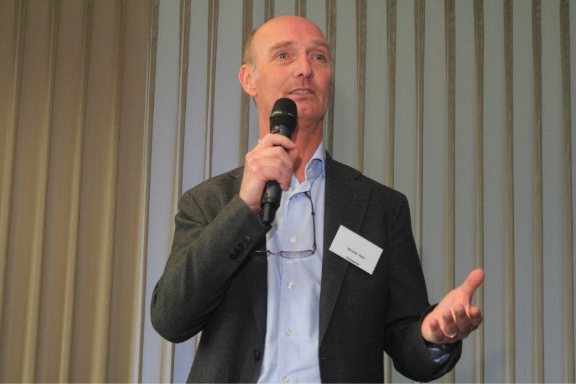
Wouter Vaes (Peregrion) on metabolic flux analysis and translational biomarkers.
Xiaomin Wang (Scientific Director, Bristol Myers Squibb) presented data on target engagement studies and the use of special matrices, including bone marrow, further broadening the scope of demonstrated microtracer applications.
Poster presentations
The symposium also featured scientific poster presentations from Celerion, Sanofi, Debiopharm, Quotient, Merck KGaA, Pfizer, TNO, and Peregrion, covering topics from radiolabel positioning optimisation to automated sample processing and reverse cholesterol transport.
Poster titles can be accessed via this link.
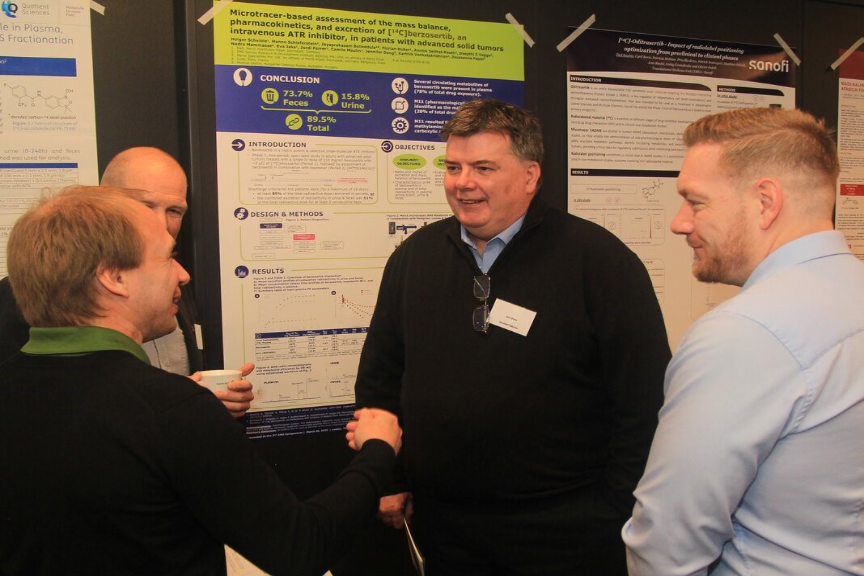
Delegates discussing poster presentations during the break.
Recurring themes from the discussion
Several topics surfaced repeatedly during the presentations and in conversations between sessions.
Internal adoption of Qualified Material. While ethical committees have accepted the risk-based approach, obtaining internal approval from CMC, QA, and QP departments remain a practical challenge at many organisations. The pathway is available, but internal policies are still catching up.
Logistics and shipment planning. Timelines are particularly relevant for discharge studies, and can be affected by courier selection and cross-border shipment procedures. This operational detail was raised by multiple attendees as a factor that warrants attention during study planning.
Cost perception of conventional studies. There remains a perception in parts of the industry that conventional high-dose mass balance studies are cheaper and faster. This view does not account for the downstream cost of late-stage findings, such as unexpected metabolites, that could have been identified earlier through a microtracer approach, and the optimized design and selection of follow up clinical studies.
Relevance for biotech and big pharma alike. A question was raised about whether the benefits of microtracer studies apply equally to biotech companies. The consensus was that they do. While biotech organisations may prioritise proof of efficacy, the value of de-risking clinical programs through early human ADME data is relevant regardless of company size.
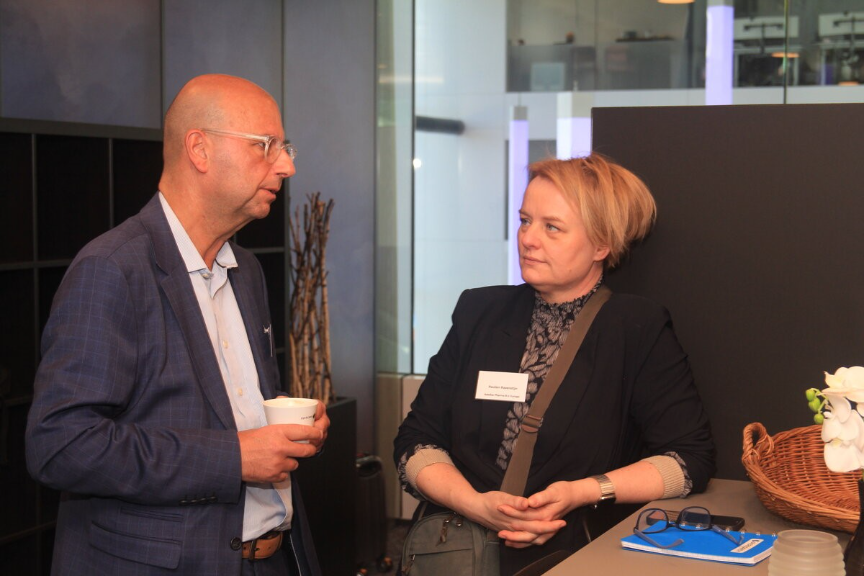
Networking between sessions.
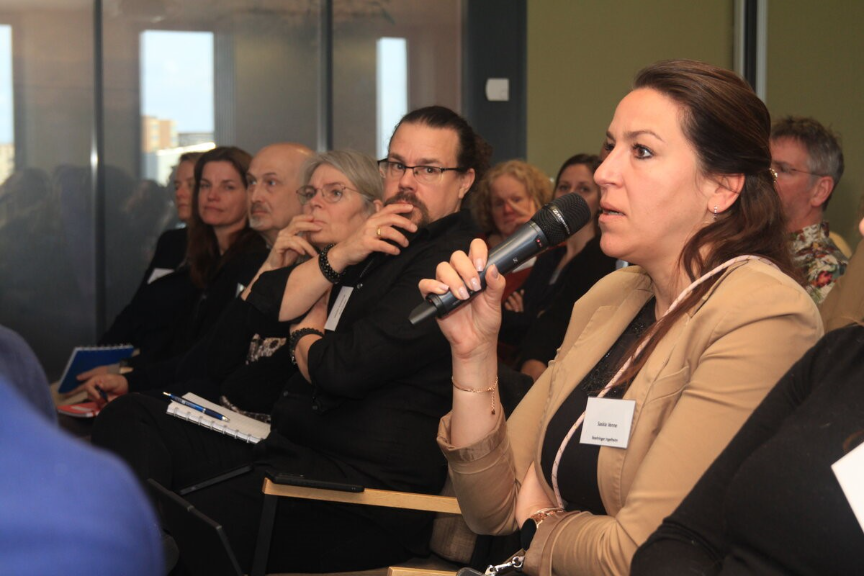
Active audience participation during the Q&A sessions.
The central message
Every compound has a different metabolic profile, which is why early human ADME insights are so valuable. The discussion about microtracer study design should therefore be an integral part of clinical development plans. Planning should begin in parallel with preclinical toxicity studies, not after their completion.
During discussions it came up that adopting a “human first, human only” approach is not limited to clinical operations. It requires rethinking across the entire drug development process, from preclinical planning through regulatory strategy.
A microtracer approach has earned its place in clinical development. The relevant question now is not whether to apply it, but when to start planning for it.
To discuss how a microtracer study could be integrated into your development program, contact the Peregrion team.
